
How Taylor Swift Stays Relevant in the Platform Era
Masterclass in Platform Thinking for Legacy Businesses



Welcome to the first (special) issue of Platform Thinkers Spritz, the space we’ve created to share stories of innovation and leadership from legacy companies and managers who use platforms and platform thinking to foster innovation.
We’re kicking off with a special edition: looking at Taylor Swift’s career through platform eyes, on the very day she releases her twelfth album The Life of a Showgirl.
Every other week, we’ll share one innovation case from legacy firms using platforms—drawn from the 140 cases we studied for our latest book The Digital Phoenix Effect—but not included in the book.

What else? Grab a Spritz, enjoy the read, and share the newsletter with your friends if you like it!
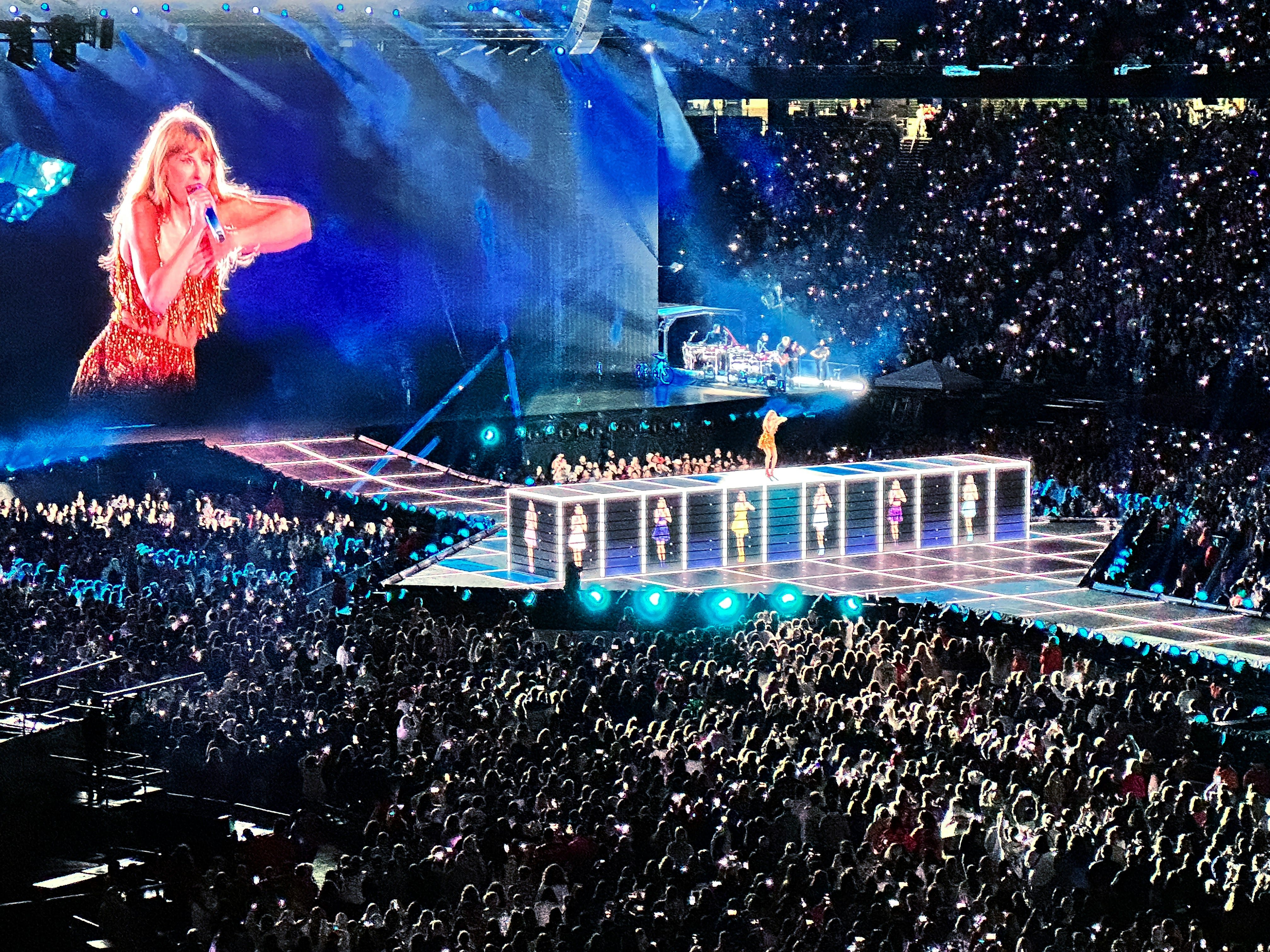
Most superstar artists from the pre-streaming era face the same dilemma as legacy businesses in traditional industries: they struggle to stay relevant when platforms change the rules. Consider Katy Perry, who—like many of her peers—still enjoys global recognition but no longer dominates the charts with new hits. This is a familiar trajectory: early success built on CD sales and traditional distribution rarely translates into sustained leadership in the era of Spotify, TikTok, and YouTube.
The same pattern plays out in business. Hotels once seemed untouchable until Airbnb redefined travel. Taxis held firm market share until Uber rewired urban mobility. In both cases, platforms reshaped customer expectations, creating new forms of value through network effects and shifting the basis of competition[1]. Legacy firms, despite their brand power and customer bases, often found themselves displaced.
Taylor Swift is the striking exception. Nearly two decades into her career, she has not only maintained relevance—she has grown stronger. She has set new records in both physical and digital formats: from selling 40,000 copies with her debut in 2006 to 2.6 million equivalent units with The Tortured Poets Department in 2024, superpassing even earlier peak of the 1989 album in 2014. She also holds the three highest streaming debuts in history, with 313 million daily streams on Spotify for TTPD. These are not the numbers of a legacy artist in decline; they are the metrics of an artist who has learned how to thrive in the platform era[2].
Swift’s story is more than a pop culture anomaly. It offers a counterintuitive but powerful lesson for senior leaders[3]: in a platform-driven world, relevance does not always come from creating a new platform. Sometimes, it comes from mastering the ones that already exist, with a clear platform thinking approach.
The Trap of Legacy Firms in a Platform World
If history is any guide, Taylor Swift’s trajectory should have followed the same decline as her peers. Superstar artists who built their careers in the pre-streaming era often find themselves trapped in what Kevin Evers describes as “phase one”: immense fame and album sales when CDs and downloads dominated, followed by fading influence once platforms took over. Their catalogs remain valuable, but their ability to generate new hits and cultural momentum diminishes.
This mirrors the fate of many legacy businesses. Platforms change the rules of competition: they scale fast, create network effects, and shift value away from traditional assets, reinterpreting it in new ways. Just as Airbnb and Uber transformed entire industries, digital platforms in music, media, retail, and mobility have forced established companies to rethink their models[4]. For most incumbents, this transition is painful.
Many firms, recognizing the power of platforms, try to build their own. Siemens launched Siemens Xcelerator to accelerate digital transformation in manufacturing. AXA developed the Digital Commercial Platform to reinvent customer interactions[5]. These moves are bold—and often necessary. But not every organization can build a platform from scratch.
Taylor Swift’s strategy points to a different path. Instead of creating her own platform, she mastered the art of using existing ones—Spotify, TikTok, Instagram, YouTube, and now podcasts (still based on platforms like Spotify, and on pills vitality on TikTok and Instagram)—to amplify her assets and strengthen her bond with fans. Her ability to leverage rather than build platforms breaks the conventional wisdom that relevance requires ownership.
The Strategic Question Every Leader Faces
How can an artist with nearly 20 years of history not only maintain but expand her relevance in the platform era? And, more importantly, what can senior leaders in legacy businesses learn from her approach?
Taylor Swift’s career poses a strategic puzzle. She fits the profile of a “legacy firm”: long-established, hugely successful in an earlier model, yet at risk of decline in a new platform-dominated environment. By conventional logic, her influence should have peaked with the blockbuster 1989 in 2014, just as streaming was overtaking physical sales. Instead, she has become more dominant than ever, surpassing her own records with Midnights (2022) and The Tortured Poets Department (2024).
The key question for executives is the same: when platforms reshape the rules of value creation, how do you avoid decline? Do you need to build a platform of your own—or can you, like Swift, thrive by strategically leveraging those that already exist?
Three Lessons from Taylor Swift’s Platform Playbook
Taylor Swift’s success in the age of platforms is not about luck or raw celebrity power. It is the result of deliberate strategic choices that mirror what legacy firms must do to remain competitive when platforms reshape their industries. Her career offers three practical lessons for senior leaders.
1. Use the Advantage of Your Position to Pause and Assess
In 2014, at the peak of her early career success with 1989, Swift did something unthinkable: she pulled her entire catalog from Spotify[6]. Her reasoning was clear—streaming platforms, in her view, undervalued artists’ work. At the time, Spotify had about 50 million active users, far smaller than its 600+ million today. By walking away, Swift used her market power to pause, reassess, and send a signal: she would not let platforms dictate the terms of her business model.

Most artists at the time did not have this option; they needed the exposure platforms offered. But Swift’s position allowed her to take the risk. For leaders in legacy firms, the lesson is straightforward: incumbents often underestimate the leverage they have. A dominant brand, a loyal customer base, or proprietary assets provide space to step back and evaluate new platform dynamics before diving in.
Just as Swift returned to Spotify in 2017 when the cost of staying out outweighed the benefits (typical effect of the platform network effects), firms must decide when to engage and on what terms. Nike did something similar, pulling off its products from Amazon in 2019, leaving them available only through third party vendors, to then put them back in 2025 Timing and leverage matter.
2. Reframe Existing Assets to Create New Value
If Swift’s first bold move was resistance, her most brilliant was reframing. Beginning in 2020, she launched the Taylor’s Versions project: re-recording her early albums to regain control of her masters after a high-profile dispute with her former label. At first glance, this looked like a defensive move. But Swift turned it into a platform-era growth engine.
The results were staggering. 1989 (Taylor’s Version) set a Spotify record with 176 million streams in a single day for the 2023 (October 27, 2023, an it is still in top 3 streaming debuts of all the times), outperforming the original release. Her re-recordings consistently charted even outperforming the originals, demonstrating that reframed assets can generate more value than new creations. Fans, empowered by Easter eggs and viral social campaigns, became active participants in relaunching her catalog.

This strategy echoes what legacy firms can do when they reframe dormant or underutilized assets for the platform economy. Siemens, for instance, didn’t abandon its hardware legacy; it reframed it through Xcelerator, connecting equipment with cloud-based services to create new value. Similarly, AXA used decades of customer data to launch the AXA Digital Commercial Platform, turning insurance knowledge into an ecosystem of digital services. These cases showed how many companies developed their own platforms, Swift show how platforms can also be leveraged.
Swift’s lesson: assets that seem outdated or commoditized can be reimagined to thrive in the platform era—if reframed with the right narrative and distribution strategy.
3. Act with Agility as Platforms Evolve
Swift’s most counterintuitive move came during the pandemic. Between 2020 and 2023, she released eight albums—four of new material (Folklore, Evermore, Midnights, The Tortured Poets Department) and four re-recordings. This pace defied conventional wisdom: that too much content risks oversaturating audiences, but it is what platforms are asking now (directly from Ek’s words, the Spotify co-founder). Instead, the opposite happened. Each release became a cultural event, amplified by platforms that thrive on constant engagement.
Folklore (2020), dropped with 16 hours’ notice, became a case study in surprise releases driving virality.
Midnights (2022) sold 1.578 million equivalent units in its first week, her highest ever until then.
The Tortured Poets Department (2024) shattered records with 2.61 million equivalent units in its debut and 313 million streams in its first day on Spotify—the highest in history.
Swift didn’t just adapt musically; she redefined how to engage fans, surprising them with different (but always coherent) strategies. Easter eggs hidden in lyrics, videos, and even social media posts turned every release into an interactive treasure hunt, fueling TikTok trends and Instagram virality.
She announced her new album The life of a Showgirl using his fiancè’s podcast, showing another shift from the previous strategies (surprise drop for Folkore and Evermore, announcements at major events for Midnights and The Tortured Poets Department). Few days after, her engagement post announcing her engagement surpassed 1 million reposts in six hours and 29 million likes, making it the most viral moment in Instagram’s history, according to Meta.
Today, Swift is experimenting again. Instead of relying on traditional interviews or late-night shows, she has turned to podcasts and YouTube—platforms that now drive cultural conversation. This constant evolution reflects true agility: adjusting formats, communication channels, and launch strategies to match the shifting logic of platforms.
Legacy businesses can learn from this adaptability. Too often, firms design multi-year transformations with rigid stage-gate processes. By the time initiatives launch, platforms and customer behaviors have already shifted. Swift’s model shows that agility is not about reckless speed but about aligning timing, content, and channels with the pulse of platform evolution.
One last thing. In all of this, Taylor put in place the key learning from leading platform companies. She has stayed true to the original vision (her songwriting to tell her stories), as AirBnb teaches (faithful to the original ‘Belong anyhwere’ mantra) and continuously built on her asset, seeing them as idle asset (her re-recordings, the Easters egg strategy), like major platforms do evolving on top of their own community (AirBnb with the Experiences, Uber with Uber Eats, and so on). This is clear Platform Thinking, while leveraging others’ platforms[7].
What Senior Leaders Can Learn from Swift
Taylor Swift’s path in the platform era is not about superstardom alone. It is about strategy: knowing when to resist, how to reframe, and where to adapt. She embodies platform thinking not by building a new platform of her own, but by mastering those that already exist.
For legacy firms, this is a powerful counterpoint. Yes, some companies should build platforms—Siemens and AXA are strong examples. But many others can remain competitive by strategically leveraging the platforms around them, in a smart way that value their position and their assets. The choice is not binary. The question is whether leaders are willing to treat platforms not as threats but as arenas where their existing assets, if reframed and deployed with agility, can become engines of renewed relevance.
[1] Hagiu, A. & Wright, J. (2024) Will That Marketplace Succeed?, Harvard Business Review
[2] Igniatius, A. (2025) The New Tayloris, Harvard Business Review
[3] Evers, K. (2025) There’s Nothing Like This: The Strategic Genius of Taylor Swift, Harvard Business Press
[4] Parker, G., Van Alstyne, M. & Choudary, S. (2016) Platform Revolution, WW Norton & Co
[5] Trabucchi, D. & Buganza, T. (2025) The Digital Phoenix Effect. Platform Thinking Publishing.
[6] Lakhani, K. & Inasiti, M. (2014) Taylor Swift and the Economics of Music as a Service, Harvard Business Review
[7] Trabucchi, D. & Buganza, T. (2023) Platform Thinking – Read the past. Write the future. Business Expert Press

Interesting points, thanks for sharing!
The bit about re-using old material is a particularly good one.
If whatever you do is digital (and this clearly doesn’t apply to every business), there are endless ways to re-use, re-purpose and re-publish the same old things under a new light, bundle, format or whatever else, at each iteration adapting to the new medium and building on the previous momentum.